

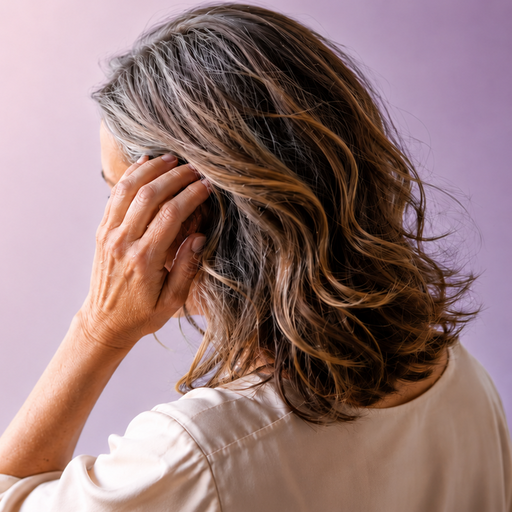
Why Your Hair Changes After 40
Understanding how hormones really affect your hair, so you can adjust your routine instead of chasing the hair you used to have.
Have you noticed that your hair just doesn't behave the way it used to? Maybe it's drier, finer, your part looks wider, or a few grey hairs seem to be showing up sooner than expected.
You're not imagining it, and your routine didn't suddenly stop working overnight. After 40, your body goes through a real hormonal transition, and your hair, just like your skin, feels the effects.
What's Really Happening in Your Body
Perimenopause, the transition phase before menopause, often begins between the ages of 40 and 50, and sometimes even earlier. Estrogen levels start to decline well before your periods stop completely, often so gradually that you may not notice it right away.
Hair follicles are sensitive to these hormones. Estrogen helps extend the anagen phase, the active growth phase of the hair cycle, which helps keep hair thicker and stronger. As estrogen levels drop, follicles spend less time growing and more time resting. Hair can then become finer, shorter and more prone to shedding.
There's also another, lesser-known effect: estrogen helps balance the influence of androgens, hormones that are often thought of as male hormones but are naturally present in women too. As estrogen levels decline, androgens can have a relatively stronger effect, which may cause some follicles to shrink over time, similar to what happens with androgenetic alopecia.
The Most Common Changes
Finer, Less Dense Hair
About 40% of women over 50 experience noticeable hair loss related to menopause, and it often begins during perimenopause. The part may appear wider and the hair at the crown may become thinner. It's usually not an all-over type of hair loss.
Drier, More Fragile Hair
Lower estrogen levels can also mean less sebum production. The scalp and hair fibre aren't as naturally lubricated as they once were, which can leave hair feeling drier, rougher and more prone to breakage.
Grey Hair
Going grey is a little different. It's mainly caused by the natural aging of the follicle's pigment-producing cells and by genetics, rather than by menopausal hormones themselves. It simply tends to happen around the same stage of life, which can make it feel like everything is changing at once.
A Change in Texture
Straight hair may become slightly wavy. Curly hair may lose some of its definition. This can partly be linked to a finer hair fibre being produced by follicles that are changing over time.
How to Adjust Your Hair Routine
Your scalp produces less sebum and the hair fibre becomes more fragile. A few simple adjustments can make a real difference.
Washing already-dry hair too frequently can make dryness worse. Let your scalp's actual needs guide you instead of sticking to an old routine out of habit.
Gentle products that respect the scalp's natural barrier can make a difference at this stage, especially because that barrier can become more fragile as hormone levels decline.
A few minutes of scalp massage each day can help support circulation around the roots, which naturally tends to slow with age.
Heat styling, frequent colouring and tight hairstyles can add even more stress to hair that's already more vulnerable.
The routine that worked for you at 25 may not be the one your hair needs at 45. Reassess your needs from time to time, just like you would with your skincare routine.
When to See a Professional
If you notice significant hair loss, a rapidly widening part or bald patches, it's best to speak with a dermatologist or trichologist. These professionals can help identify the cause and determine whether the hair loss is related to hormonal changes or something else, such as a thyroid issue, a nutritional deficiency or stress, so you can get the right guidance and treatment.
After 40, declining estrogen levels can genuinely change the way your hair grows, retains moisture and ages. It may become finer, drier and sometimes greyer, although greying is mainly related to age and genetics rather than hormones. Understanding what's happening makes it easier to adjust your routine with your hair's changing needs in mind, instead of trying to recreate the hair you had years ago. And if anything concerns you, a hair or medical professional is always the best person to turn to.
Gisèle xx

